Building AI-Native Operations in Banking
Fraud detection, underwriting, and knowledge work are already running on AI inside the world's largest banks. Here's where the value is proven, where regulators are drawing lines, and where to start.
The numbers behind the shift to AI-native financial services.
Growth, value, adoption and regulation — the signals every financial-services leader should be able to quote.
Legacy cores can't out-run AI-native challengers
70% of banks still run core operations on infrastructure built decades ago, and legacy maintenance now eats close to a quarter of the average technology budget. Neobanks carry none of that weight.
AI only widens the gap: bolted onto fragmented, batch-oriented systems, it automates the legacy problem faster. Built on governed, real-time data, it compounds instead.
Most banks are still stuck in pilot mode
None of this is universal yet: 88% of organizations use AI somewhere in the business, per McKinsey, but only 7% call it fully scaled — and just 12% of North American banks have deployed any gen-AI use case in credit at all. What separates the four institutions above isn't model access; it's that they redesigned the underlying workflow instead of bolting AI onto the existing one.
The AI Executive in Banking & Financial Services Program
A live, practical, highly personalized six-week program preparing a new breed of AI-native leaders in financial services. During the program you build a fundable, governed AI-native initiative from your own institution — fraud, onboarding, underwriting, or knowledge work — designed, evidenced, and governed on our AI Transformation OS, and validated by the World AI Council.
Between sessions: one-on-one coaching on your initiative, whenever you need it.
Every stage builds toward one capstone: your AI initiative.
Week by week you step into a more senior AI role, and each stage adds a deliverable to your capstone — the initiative you'll present to the World AI Council. Tap a stage to explore it.
Built for those ready to become AI-native leaders in financial services.
Leaders join from across the institution — retail and corporate banking, payments, risk, compliance, technology. Fully personalized: you build a real, executable initiative in your own institution.
You answer for AI results across the institution. Leave with a working method — not another vendor demo.
You run retail, corporate, payments, or wealth — and want to be the one who makes AI real inside your P&L.
You own AML, credit risk, or regulatory response — govern AI from real understanding, not briefings.
You carry the core, the data estate, and the threat surface. Turn modernization into governed AI initiatives.
Real initiatives, built by leaders in finance.
95% of AI pilots never reach the P&L. These did — built in the Accelerator by leaders in banking, payments, and financial regulation.
Merchant onboarding, minus the friction: KYC and risk checks guided end to end for banks and payment platforms.
 RK
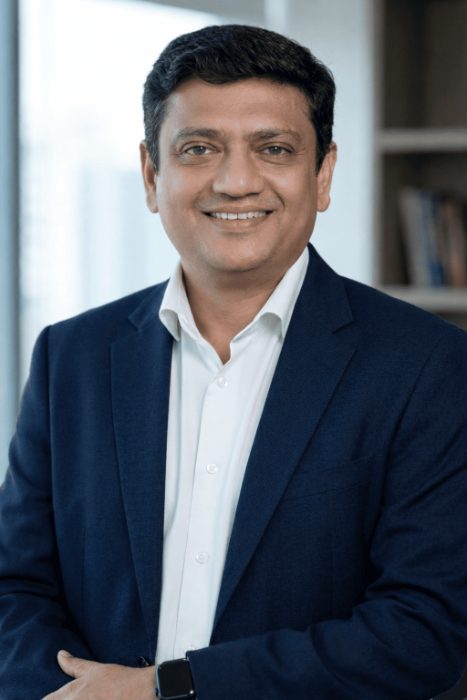
RKA copilot for financial regulators surfaces supervisory risk signals and ranks where attention is needed first.
 SV
SVThe AI Board Co-Pilot turns board governance into audit-ready, execution-driven decision-making.
 GK
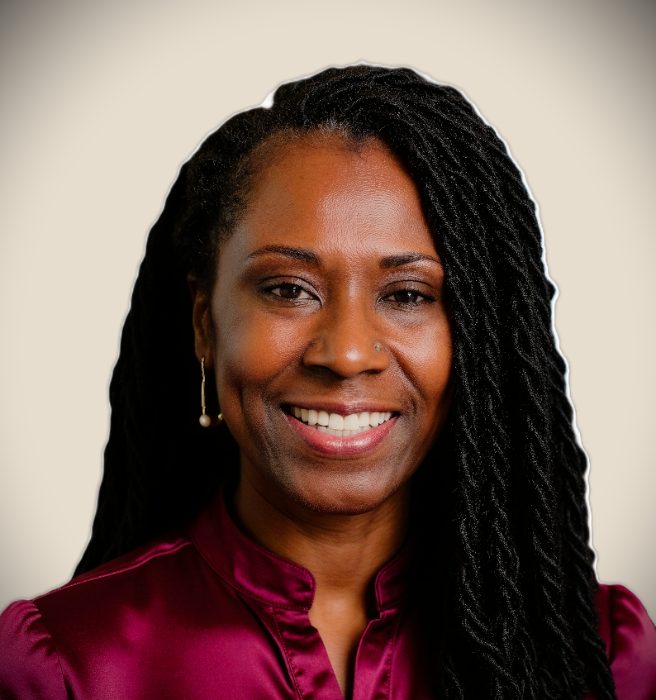
GKEvery proposed AI use case passes through AGIA, which weighs its risk and routes it down the right governance path.
 DW
DWThe fastest, most proven payback in the sector — HSBC and Mastercard both show material results within a single deployment cycle.
The safest place to start: contained blast radius, fast time-to-value, and the clearest precedent at scale in JPMorgan's LLM Suite and DBS-GPT.
Real satisfaction gains once properly governed — DBS Joy lifted CSAT 23% handling routine servicing, freeing staff for what actually needs judgment.
The highest long-term value and the most regulated ground under the EU AI Act. Start as a human-in-the-loop copilot drafting credit memos, not an autonomous decisioning system.
None of the above scales past a pilot without clean, real-time, governed data — precisely what a legacy core was never built to provide.
Run by experts who know finance. Backed by a council.
Delivered by operators who run real AI transformation engagements with banks, payment networks, and regulators — using validated frameworks that turn adoption into results.
Loved by AI-native leaders.
Executives, consultants, and founders from 12+ sectors — on what changed after six weeks.
 PS
PSI went from using AI for fun to leading serious, business-focused AI — building business models, governance frameworks, and transformation roadmaps. I now drive AI initiatives in banking with confidence.
 EB
EBAI doesn’t fix problems — it amplifies them. I learned how to apply AI responsibly to improve decision-making and operations. It exceeded all my expectations.
 NO
NOHighly valuable and practical. I’ve already implemented the frameworks in my organization with real success — the governance work especially.
 ES
ESComing from a security background, it gave me the structure and confidence to step into AI leadership — and it’s already opening high-level opportunities.
GKIt structured my thinking end-to-end — from problem definition to governance and transformation. Strategic and operational at once. A real mindset shift.
PSI went from using AI for fun to leading serious, business-focused AI — building business models, governance frameworks, and transformation roadmaps. I now drive AI initiatives in banking with confidence.
EBAI doesn’t fix problems — it amplifies them. I learned how to apply AI responsibly to improve decision-making and operations. It exceeded all my expectations.
NOHighly valuable and practical. I’ve already implemented the frameworks in my organization with real success — the governance work especially.
ESComing from a security background, it gave me the structure and confidence to step into AI leadership — and it’s already opening high-level opportunities.
GKIt structured my thinking end-to-end — from problem definition to governance and transformation. Strategic and operational at once. A real mindset shift.
.jpg) MG
MGIt bridged AI and business for me. I built solutions before but couldn’t present them — now I can. The community feels like an incubator for ideas.
 CK
CKAI transformation is not a technology challenge — it’s a business and stakeholder alignment challenge. The frameworks are practical and immediately applicable.
 KM
KMI joined for a systematic approach to AI strategy — and that’s exactly what I got. The governance models were extremely valuable for building real AI initiatives.
 MC
MCIt exposed me to new areas like agentic AI frameworks — and helped me evolve my project using real tools and platforms.
 NE
NEIt simplified AI and gave me a clear structure to apply it practically and responsibly — with realistic, implementable use cases for my organization.
MGIt bridged AI and business for me. I built solutions before but couldn’t present them — now I can. The community feels like an incubator for ideas.
CKAI transformation is not a technology challenge — it’s a business and stakeholder alignment challenge. The frameworks are practical and immediately applicable.
KMI joined for a systematic approach to AI strategy — and that’s exactly what I got. The governance models were extremely valuable for building real AI initiatives.
MCIt exposed me to new areas like agentic AI frameworks — and helped me evolve my project using real tools and platforms.
NEIt simplified AI and gave me a clear structure to apply it practically and responsibly — with realistic, implementable use cases for my organization.
Lead the transformation. Don't report to it.
Six weeks from now, you present a council-validated AI initiative — and carry the credential to lead what comes next.
One payment. Everything included — the full six weeks, coaching, council review, and certification.
The same program and certification — spread over three monthly payments.


Banks are already running on AI
These aren't pilots — they're production systems with measured, reported results.
LLM Suite reaches 200,000+ employees daily across the firm's 230,000-person workforce. Bankers now generate a client-ready presentation in about 30 seconds — work that used to take hours.
HSBC's Dynamic Risk Assessment platform screens over a billion transactions a month, catching 2 to 4 times more suspicious activity than the rule-based system it replaced — while cutting false positives 60%.
DBS runs 2,000+ AI models across 430+ production use cases, generating roughly S$1B in measured economic value in FY2025 — up from S$180M in 2022.
Mastercard's AI-powered fraud systems have prevented more than $30B in customer fraud losses in recent years, with 42% of card issuers reporting savings over $5M each.
Bring the case to your leadership team.
A free executive brief on the operational forces pushing financial institutions to govern AI now — the market data, the ROI evidence, and the use cases already shipping results. Built to forward to your leadership team.
Rethinking Finance in the Age of AI
A leadership brief on the ROI gap and the operating discipline that closes it.
Questions, answered.
No. The program is built for banking and business leaders — strategy, governance, business modelling, and leadership, not code. No programming experience is required.
Four hours a week for six weeks: two live 2-hour sessions on Zoom (Mondays and Thursdays), plus optional one-on-one coaching scheduled around your calendar.
One real initiative from your own institution — fraud detection, client onboarding, underwriting support, servicing, or knowledge work. Week by week you take it through use-case discovery, business modelling, readiness and governance on the AI Transformation OS — and finish with a complete AI strategy presented to the World AI Council.
Yes — that’s the point. The governance stage maps your initiative against the EU AI Act, DORA, and model-risk expectations like SR 11-7, and shapes it as a governed, human-in-the-loop system your compliance team can sign off on.
Every session is recorded, and your one-on-one coaching keeps your initiative on track. The program is designed for full executive calendars.
Your final initiative is reviewed by a World AI Council committee, and certification is awarded on approval. The CAIO credential is accredited by the World AI Council (WAIC) and the Professional Development Institute (PDI).
Everything: the six-week live program, one-on-one coaching, all frameworks and templates, the council review of your initiative, the CAIO credential, and lifetime access to the community.
Yes. Private cohorts run at US$35,000 for up to 12 seats — one institution, shared initiatives — or as a custom enterprise engagement with multiple cohorts per year.
Bring one real challenge.
Leave with an AI initiative you can act on.
Six weeks from now you present an evidence-based, fundable, governed AI initiative to the World AI Council — and carry the credential to lead what comes next.